Monday, 7 December 2009

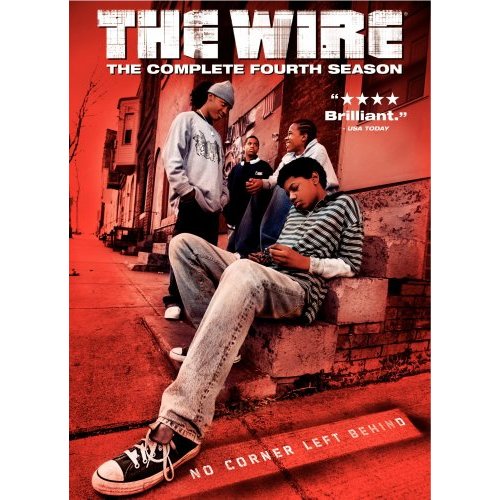
Things I love more than a cold beer on a hot Christmas morning: Case File #2: The Wire


Friends and family alike may groan at the sight of this blog post, should they read it. Because, of The Wire, I just won't shut up. There's a reason of course, which is that The Wire is the best television programme of all time. It is better than anything put out anywhere in the world and while challengers to its throne continue to emerge in this golden age of television, Breaking Bad, Mad Men and Deadwood coming closest, it remains the King. And as Omar would tell you, "you come at the King, you best not miss."

The Wire was an HBO television series, which ran five seasons beginning 2002 and was set in contempory Baltimore, Maryland (Bodymore, Murderland). Trying to sum up its epic scope now would be doing it a giant diservice, but for the purposes of this review I'll try anyway. An engrossing, slow burning, novel on film; The Wire is about the exploration of the death of the American Empire. About how institutions are flawed, failed concepts and how people are mere cogs within unfeeling, unsympathetic systems, be they governments, organised crime, unions, corporations, the media or the educational system. At first, The Wire focussed on the ongoing drug war between the Baltimore Police Department and the various drug gangs working the streets of Baltimore, slinging product and dropping bodies.

As it went on, however, it expanded its focus, to include the dock workers (season 2), city hall (season 3), the public school system (season 4) and the city newspaper (season 5). The cast was incredibly expansive, involving (at the end of its run), over 40 regular or recurring characters, all of whom were pretty terrific in my humble opinion. Also of note, probably 60 to 70% of the cast was black, which is very unusual and brave for an American tv show.

The authenticity of the show was also unparalleled. David Simon, the show's creator was a former Baltimore Sun journalist and his writing partner, Ed Burns was a BPD Homicide detective. The two collaborated on Simon's seminal and fantastic book Homicide; a year on the killing streets which in turn, inspired the tv series Homicide; life on the streets, which was a sort of Wire beta test.

If you start watching the Wire, you first must pass through a sort of trial by fire. Simon makes almost no concessions to his audience, believing you to be as smart as he is (which you (and I) almost certainly, aren't). You will be thrown in without as much as a word of warning. You will not be spoon fed or hand held on who everyone is, what their roles are, who they work for, what their position is or what their motivation is. As well as this headscratcher, you will be thrown specific police terminology and street slang from urban, black America, which, as a white, middle class British man, is like watching a Hong Kong film without subtitles.
But do not fear, just watch the first three episodes in a row and you should make it through to the other side, unscathed and enlightened.

The Wire is, at it's heart, a Greek tragedy. It most often deals with how institutions let people down, swallow them up, use them and spit them out when they're done. Each and every person is a small, tiny, forgettable part in a larger mechanism (except Omar, more on him later). And each institution, be it Police, school, prison, newspaper, drug gang, has its own unique, but ultimately parallel power structure. All of these forces are routinely pissed on by the only individuals with true power, the politicians and police brass sitting at the top of the food chain. Except their priorities are yet more power, wealth and covering their arses. It is an old story.

It is an angry show, one which challenges, but does not pretend to have anything close to answers. Simon may be one of the great chroniclers of his age, but he also understands that it will take more profound events and minds than even his own to solve the problems facing our so called civilisation.
What's beautiful about the show, is that in spite of its healthy and very much overwhelming nihilism, it is a show of humour and humanity. It showcases true presences who try to move beyond their trappings and enact real difference, although they are still trapped by their situation.
Within the police, it takes true courage (and pig headed stupidity) to even attempt to bring real cases to the court house. Men like series lead Jimmy McNulty ("What the fuck did I do!?"), Lester Freamon ("All the pieces matter."), Kima Greggs ("You motherfuckers kill me. Fighting the drug war, one brutality case at a time.") and Cedric Daniels ("Bend too far and you're already broken.") who routinely work within the Major Crimes Unit to do real police work. Then there's Stringer Bell ("Until then we are going to handle this like businessmen , make the profit and later for that gangster bullshit."), a drug dealer and crime boss, who is a murderer and blight on society, but with other visionaries like Proposition Joe ("...proposition then."), a reformer looking to revolutionise the drugs trade with co-ops and an end to street violence.
One of the Wire's finest moments came with Season 4's school story. The following of four boys through one fateful summer, as they each loose their innocence to the murder, drugs and poverty around them. And of course, I cannot forget the streets. I cannot forget Bubbles ("Ain't no shame in holding on to grief . . . as long as you make room for other things too."), a junkie, homeless, waste of a man, who holds more charisma and dignity than half of the politicians and police brass combined. A man who's ascent up a flight of stairs was one of television's greatest inspirational moments.
And lastly, to Omar ("I got the shotgun. You got the briefcase. It's all in the game though, right?" "Oh, indeed."), the stick up man. Which is to say, a man who robs drug dealers for their dope and cash. An extraordinarily dangerous profession by any stretch of the imagination. Omar Little is a legend, the only character to refrain from profanity, to stick stringently to his code (for the most part), to acquire a mythical, wild west status, to be a practising homosexual. Most importantly, unlike every single other character in the Wire, Omar is bound to no institution, no hierarchy, no narcotic, no rules. He is a free.
And of course I've left out an epic assortment of other characters, but there's only so much time in the day.

The Wire is profound, seminal, challenging and socially conscious. It asks the right questions, pushes the right buttons, forces the issues. It is character driven, superbly acted, written and directed. It is genuine, hard and nihilistic, while being damned funny (The "fuck" crime scene being paramount). It changed the way I look at television drama, what I expect from TV, and raised the bar for all to follow.

And finally, about the real Baltimore, Maryland. The crushing poverty and despair at the heart of the series is as close to a documentary as fiction gets. Such a realistic portrayal has never before been seen in crime drama. The Wire was filmed in Baltimore. It used local residents and relied on real life events to inspire its story lines and the lives of its characters. In short, you must see this series, it is simply, fucking brilliant.

"All in the game, yo."


Words of Wisdom #000001 - Al Swearengen

"Pain or damage don't end the world, or despair, or fuckin' beatings. The world ends when you're dead. Until then, you got more punishment in store. Stand it like a man -- and give some back."

Tuesday, 17 November 2009

Richard Littlejohn is a cunt


Some of you may have noticed, I'm a fairly politically minded person. I am opinionated, yes, stubborn also and think with a heavy slant on the philosophy and morality of things. It's just the way I am. When I was a pretencious teenager, I discovered philosophy, an unrealised and ultimately profound new branch of thought and feeling. I believed I'd found myself. Ha! That's a longer road than I thought it would be. A road, that probably doesn't end, even at the end of life.

A few weeeks ago, a man appeared on a BBC television programme, a political panel show called Question Time. This man's appearence drew words of condemnation, as well as anger and violent protests outside of the BBC's Television Centre in London.
His name, is Nick Griffin.

First a disclaimer; I believe that Nick Griffin should be allowed a political voice as well as a place and platform to speak. I believe this for two reasons. Firstly, he is a politician, legitimetly elected to office by citizens of our country and secondly, we live in a supposid democracy, where he is afforded the right to speak outr on any number of issues and give his opinion.
Though I believe this strongly and with few exceptions, I am not a fan of Mr Griffin, nor of his political party, the British National Party (BNP).
For the BNP are a very nasty little organisation. An offshoot and supposid legitimet evolution of the National Front, the BNP believes that white people are the original natives of Britian and sees all non whites, as well as Jews and homosexuals as inferior. There are a facist and racist organistion and anyone disputing this is a bloody idiot. A point in evidence, the party was recently forced to change its original charter disqualifying non whites from joining, because of recently introduced discrimination legislation. Then, to show the true hypocrisy of the party, some non white people tried to attend a BNP meeting. Here's how that worked out for them; http://www.thisislondon.co.uk/standard/article-23759615-non-whites-barred-from-bnp-meeting.do

So yeah, a racist, a homophobe, an anti-semite, should be allowed to speak, because he represents a part of our nation, however vile and repugnant, and also, it was glorious fun to watch him get his arse handed to him intellectually.

This thursday another man will attend the Question Time panel. His name is Richard Littlejohn. He's Griffin's favourite "journalist". There will be no protests, nor outpouring of rage and anger. He will sit there, smug and happy and give his nasty little opinions. Littlejohn is a newspaper columnist and "news" presenter. He writes primarily for the Daily Mail (otherwise known as The Daily Hate Mail). Littlejohn is an rabid and frequent critic of Gypsies, homosexuals, transgenders and foreigners.
On Tony Martin, the farmer who shot a gypsy burgler in the back as he was running out of his house, he said; “True, [Martin] hated gypsies. He had every reason to hate them. He and his neighbours had been terrorised by them for years.”
On the Rwanda genocide, where hundreds of thousands of Tutsis were killed by their Hutu neighbours he said; "Does anyone really give a monkey's about what happens in Rwanda? If the Mbongo tribe wants to wipe out the Mbingo tribe then as far as I am concerned that is entirely a matter for them."
Nice one Richard, the murder of an entire people. Its nice to see some genuinely unabanshed racism out in the air. Bonus points for the word 'monkeys' and 'Mbongo'. Well done indeed.
In response to Yorkshire police's attempts to reach out to the gay community he relayed an anecdote in his column; "[A friend] reliably informed me there are no homosexuals in South Yorkshire. [The friend said,] 'Not live ones, anyway. We send them all down to London.'”
And lastly, the icing on the cake, the final nail, on the Ipswich murders of five prostitues, Littlejohn sought to involve us in his warped, twisted view of reality. He said;
"...in the scheme of things the deaths of these five women is no great loss.
They weren't going to discover a cure for cancer or embark on missionary work in Darfur. The only kind of missionary position they undertook was in the back seat of a car...
Frankly, I'm tired of the lame excuses about how they all fell victim to ruthless pimps who plied them with drugs. These women were on the streets because they wanted to be."
He later said; "death by strangulation is an occupational hazard."

Thanks for Johann Hari for collecting all this bile in one place: http://www.johannhari.com/2005/06/12/richard-littlejohn-racist-and-homophobe as well as Littlejohn himself (I suppose) for letting this gem stand for all to see: http://www.dailymail.co.uk/debate/columnists/article-423549/Littlejohn-Spare-Peoples-Prostitute-routine-.html

I'm not saying Richard Littlejohn shouldn't be allowed on QT. He has freedom of speech as we all do. I reserve his right for say this purely hateful things. Just as I reserve the right to call him a cunt.

Tuesday, 3 November 2009

The Joy of Urbex(ing)


Some years ago, I was randomly slogging my way through the internet when I came across a fascinating article, from a very impressive and interesting blog. The blog is called BLDGBLOG and the article can still be found here: http://bldgblog.blogspot.com/2005/11/london-topological.html
Investigating the underground realm that exists beneath our very feet, the article is all about a growing and highly popular movement known by the rather daft name of Urbexing, short for Urban Exploration.
The name is obvious. It is the exploration inside urban enviornments. But you may ask, what is the point of exploring somewhere which is essentially the antithesis of exploration. When one thinks of exploration, we think of Sir Francis Drake, Marco Polo and Sir Walter Raleigh. These men set sail on wooden ships, for distant lands where no western man had ever gone before. So how can one explore what is essentially a place not only discovered, but developed and shaped and changed and inhabited over decades if not centuries?
Well, civilisation is ever changing. Factories, sewers, tunnels, buildings, shops, military facilities, power generating plants, houses and offices all come and go, are inhabited and abandoned, built and demolished. Urban Exploration is about finding these forgotten places, these ignored, hidden and marginalised little slices of our cities and towns and nations. It is about rediscovering and reconquering these places, before they slip away forever.
Urbexers have only two rules. Take only photographs, leave only footprints. It is a key feature of the community. You cannot break into these places, you must gain access legitimently, otherwise you are not only trespassing (a civil offence) but also breaking and entering (a criminal one).
Although my madening work schedule and impossible life style makes if difficult to keep up with this new hobby, I have had some amazing experiences around the Derby area. I have walked through a pitch black tunnel beneath the city centre, I have stood among giant cooling towers of the now mostly demolished Willington Power Station and I have investigated the winding corridors and partially collapsed theatre of the Derby Hippodrome.
I recommend Urbexing to anyone with a healthy sense of adventure and danger, as well as an interest in history, architecture, sociology and philosophy. There are places all around us. You only have to go and look for them.

Saturday, 26 September 2009

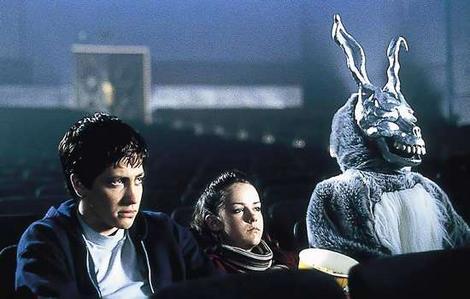
Things I Love More Than Oxygen: Case File #1: Donnie Darko


I first heard about a little Indie film oddity with a bizarre name on Jonothan Ross' Film '01. After seeing a thirty second or less preview of the film I was unexpectedly obsessed. Living in a small Shropshire town at the time my options for viewing foreign/indie films were almost non existent. I considered spending a shitload of money on a train ticket to Birmingham to see it and was crushed when I missed out during a Christmas shopping trip in Manchester.
Then it came to Ludlow, my hometown, any way. Go figure.

It didn't dissapoint either. Donnie Darko is the directoral and screenwriting debut of Richard Kelly and filmed for a measly $1 Million. It was helped by two things; smart writing and celebrity assistance, most prominently in Drew Barrymore's production company. It also launched the career of some bloke called Jake Gyllenhall. Whoever he is.

It is, to this day, my favourite film. I love it so much I had a tattoo referencing the film. Specifically the scene where Donnie has written Frank's countdown to armageddon on his arm in ink with demented penmanship. Except mine is in very permanent ink.

It is the story of the titular Donnie, a disturbed, mentally ill young man growing up in 1980s, small town America. He is on medication and sleepwalks often, waking up all over town. One night he sleepwalks to a golf course where he sees Frank, a seven foot tall man dressed in a creepy, demonic rabbit suit. Frank tells him the world is going to end in 28 days, 6 hours, 42 minutes and 12 seconds. When he gets home, he finds a Jet Plane engine has dropped through his bedroom ceiling, which would have killed him. Oh, and there's no other plane parts around, nor for that matter a missing plane.
Donnie enters therapy, while simultaneously acting out Frank's chaotic, anarchistic will on his small town and trying to unravel the mystery stretched out before him. Oh, and he will also fall in love, travel through time (possibly), challenge the moral authority of his world and save the universe (again, possibly).

Donnie Darko is a film literally overflowing with ideas, yet none of them feel overwrought or padded. It all fits together. It cobbles together ideas of philosophy, mental illness, mythology, religion, spirituality and science fiction into a cohesive whole. Its ending is very, very open, but in a way which will allow you to impart your own interpritation onto the film. Its all about what you take from the experience.

Its cast is pretty terrific, without a bum note among them. Gyllenhall (Jarhead, Brokeback Mountain) is great in the lead, at once likeable and charismatic, while creepy, disturbed and desperate in his descent. Mary McDonnell (Independence Day, Battlestar Galactica) plays his mother, a woman torn between standing up for her son and falling into line with the community around them. There are other characters worthy of note, such as Noah Wyle (ER) as Donnie's high school science teacher and Patrick Swayze (Ghost, Dirty Dancing) as an insidious motivational speaker.

If this review has thus far led you to believe Donnie Darko to be a dry and humourless in it's execution, then I apologise for misleading you. There is a great deal of humanity at the core of the film. From Donnie's psychiatrist sessions, to his final speech with his mother, to the closing montage of people at rest, overlapped with the former Christmas number one Gary Jules - Madworld, there is alot of heart on show.
I also hadn't expected the film to be as funny as it was. It is interlaced with very funny moments; from the argument across the dinner table to the aftermath of Kitty Farmer's (Beth Grant) Love-Hate lesson, there are plenty of laughs amid the dramatic tension. Also, one word; Smurfs.
And all that that doesn't detract an inch from the tangible sense of dread and foreboding which runs through the film. A sense that time is truly running out, that a crescendo is fast approaching. And then that finale, which infuriated many, which left me excited, excited at all the possibilities. For what is the Universe, if not endless posibilities?

And lastly, a personal side bar; Donnie Darko changed the way I looked at storytelling. It helped me understand that linear, realist fiction isn't the only way to tell a story. I was shown a new world, where metaphysics, metaphor and surrealist elements can flow together in a profound way. I was shown that stories need to be more than just the telling of a tale, I was shown that it needs to say something. Donnie Darko speaks volumes.

Monday, 14 September 2009

To Create A World


I am a writer. An aspiring author. A potential scribe. I put this down to three fundemental things; the overactive and overdeveloped imagination of a lonely and isolated child, a keen, moderate and insightful intellect and a devoted mother who read all kinds of books to me from a very young age, from Enid Blyton to Tolkien.

From my earliest days of literacy I have written. At first there were new 'episodes' to my favourite childhood television programmes, Animals of Farthing Wood and Talespin. These were crude and amateur to the extreme, often comprising of two or three lines of dialogue and prose above and below a large, colourful picture. I was little more than a toddler at the time, but this was my first foray into the world of literature.

I got older and my work became more developed and complex. It was just as much about ripping off every cool movie and tv show I'd seen and been inspired by, but it was at least wrapped in the guise of something new and original. It was no longer an homage or extended universe from an already established work. Now it was all mine, at least in theory.
My characters were paper thin, without rhyme or reason to their behavoir and motivation. My dialogue was rifled with cliche and stilted, at once unrealistic and uninspired. My plots were unknowingly inspired by the mythic archetypes set forward by Joseph Campbell, although I had never heard of the man, nor Hero with a Thousand Faces. I was instead inspired by popular movies, by epic, swashbucklers, sci-fi, fantasy, adventure. My young mind was still forming into the adult I have thus become, and my early work is litered with, and sometimes wholesale stolen from the zietgeist of popular culture of my youth.

Slowly I became a true writer in that I allowed new ideas to form in my mind, rather than just telling the stories I had already experienced. Do not mistake this for an admision or brag of originality. My work is still inspired by the work of others and I'm sure the stories I will and wish to tell have been told before. My only hope is that I tell them in a fresh, interesting and profound way.

At the moment I have a project on the go. It is called The Ghosts of You and Me. It is the story of a man and a woman living in a modern city, living their normal, every day lives, their problems and triumphs for all to see. It is a love story, of sorts, with a metaphysical element. In my story, the internal, hidden fears and doubts that we all share are given an external, quasi-physical face and voice. The titular Ghosts berate and ridicule our heroes as they struggle against the everyday trials they suffer. And because the Ghosts seek to exploit their insecurities and strife, they see one another. He sees her and she sees him in their waking dreamscape.

Writing to me is sacred. It is spiritual. It is my life's blood. I will always be a writer. I may sometimes be lazy, sometimes suffer from writer's block, sometimes been uninspired and unmotivated, but it will always be a pure form of expression to me. It is a God like power. I am the sole, universal creator of a living, breathing world, a reality that I shape and create, populated and real and unique. It is limitless and unending. It is Relentless.

Saturday, 5 September 2009

Not that any of you give a shit...

...but here's a new post. I've decided, even though I have no readers, even though this is no more than an echo chamber for my various neuroses and traumas, it is a useful forum. Something theraputic, which I can accomplish in spite of writer's block and sleepy days. This blog is fun and an outlet, so I'll strive my best to keep it up.
And it won't just be random thoughts or general egomaniac rants about myself or the world either. It will have a variety of things including announcing an ongoing blog project, The Things I Love Files. These will be films, books, television, artists, music, places, people and anything that falls into the realm of 'stuff'.
#1 is a little film that I adore. Its called 'Donnie Darko' and I'll be reviewing it soon.
As well as that, there will be more chronicling of my day to day life. Not so much the ordinary, boring aspects to things, but rather, the adventures! Which I actually have a suprising amount of. ;)
Coming soon; The Tale of the Tunnel under Derby! :P
So yeah, plans. But first, a small side bar... On Writing.